Submitted for Assignment 4, Using CC Licenses and CC-Licensed Works
Applying a CC license to your own work is a good first step to entering the wonderful world of sharing. Adopting or copying a CC licensed work and sharing it out (according to its license) is a good next step. But, there are other ways you can create new open educational resources (OER) through mixing and matching CC licensed creations already out there. So, in this assignment post for Unit 4 of the Creative Commons certificate, we explore remixes as adaptations/derivatives and collections.
When you mix (or remix) CC creations, you can either create an adaptation or derivative as a new creation, or create a collection. We’ll look at adaptations/derivatives first.
Adaptations/Derivatives
According to Unit 4 of the course, “to constitute an adaptation, the resulting work itself must be considered based on or derived from the original” which often involves rearranging a work in some way, while also inserting other creations and/or your own creation(s) into the whole mix, rather like you are cracking eggs into a bowl to create an omelette, or a delicious scrambled egg mixture.
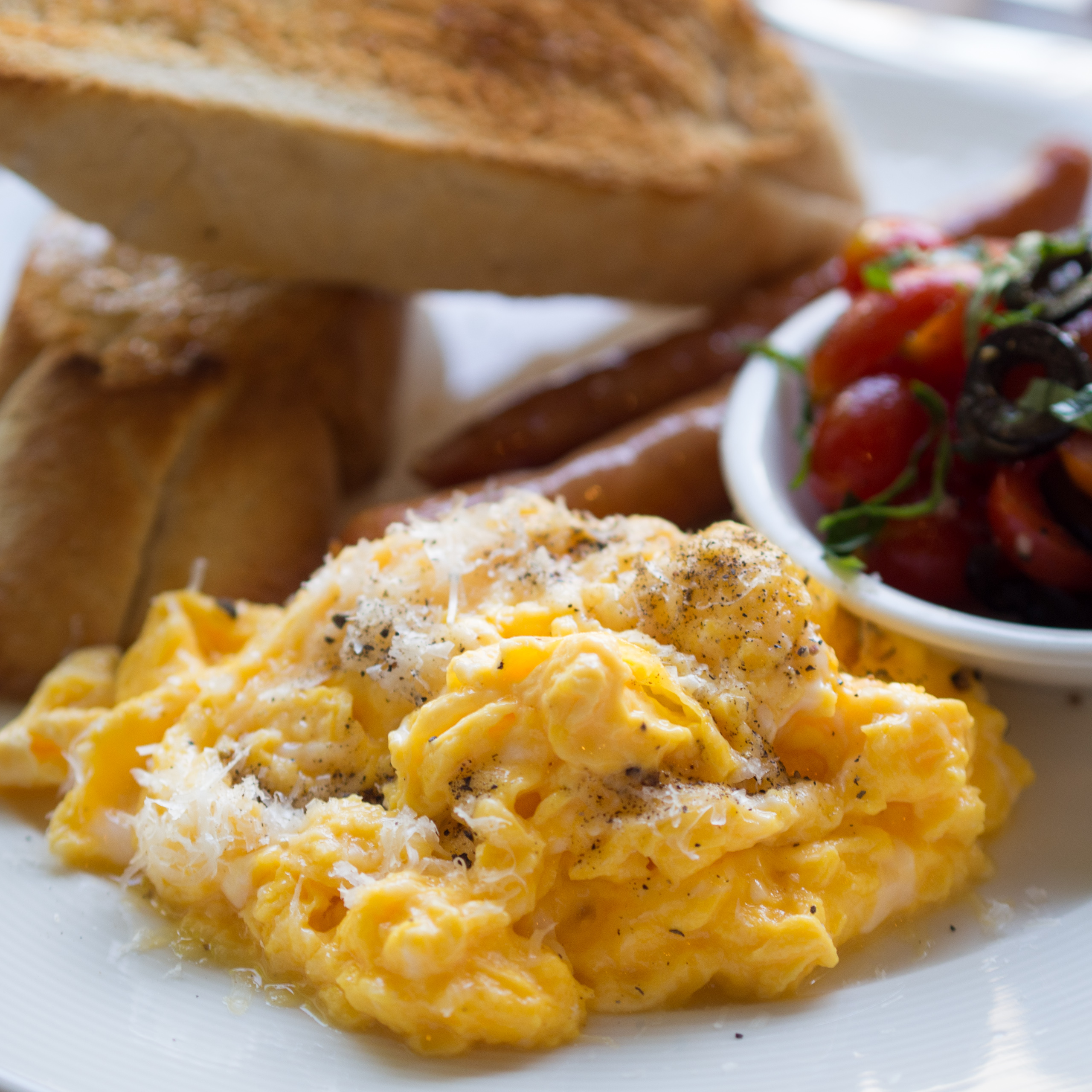
Of course, you can also take one single work and create an adaptation of it by taking parts out, mixing parts up, etc. An adaptation doesn’t have to be a combination of multiple creations, for example taking an open textbook and using only some of its chapters, reordering them, removing sections, etc. to create a new version of the open textbook.
It’s important to note that “adaptation” is not defined the same way in every country, as you can see at the Creative Commons FAQ site. I find it interesting that some of these differences are dependent on what the law views as the “originality/creativity” of the adapted work, which in my mind are rather subjective concepts.
With regards to how you can license adaptated/derivative works, the important thing to keep in mind are the original licenses of the works you have adapted/mixed together. The license you apply needs to be compatible with ALL of the licenses. A good way to check is by using the License Compatibility Chart:
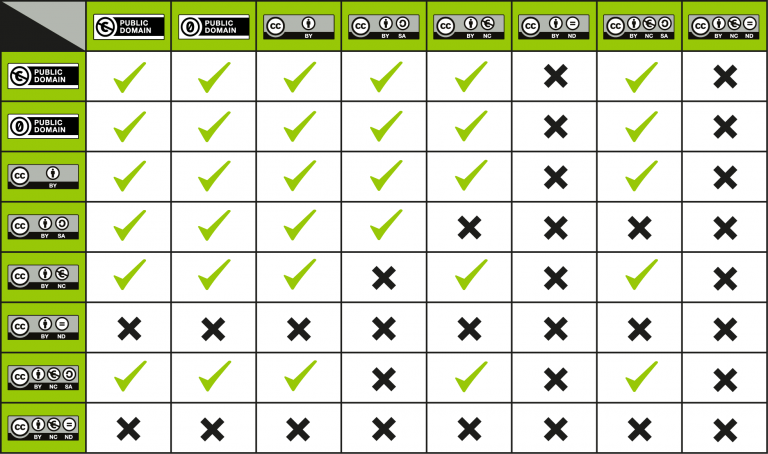
CC License Compatibility Chart / CC BY 4.0
Note that, not surprisingly enough, the one license type that can NOT be used in a remix/adaptation is the ND (non-derivative) license!
Another nice explanation of combining licenses works can be seen in this video:
Creating OER and Combining Licenses
TheOGRepository / CC-BY-SA (3.0)
Collections
Now, a collection is a little different. Collections are simply that – collections of various CC-licensed works with no mixing, no rearranging, no changing the essence of the individual creations at all. Rather like creating a textbook or course pack where each chapter is an unchanged article or another textbook’s chapter, etc. The image I present below is a collection I created in Pixlr from CC-licensed images, inspired by my own hunger – I have simply taken three images and combined them into one whole without altering any one of them.
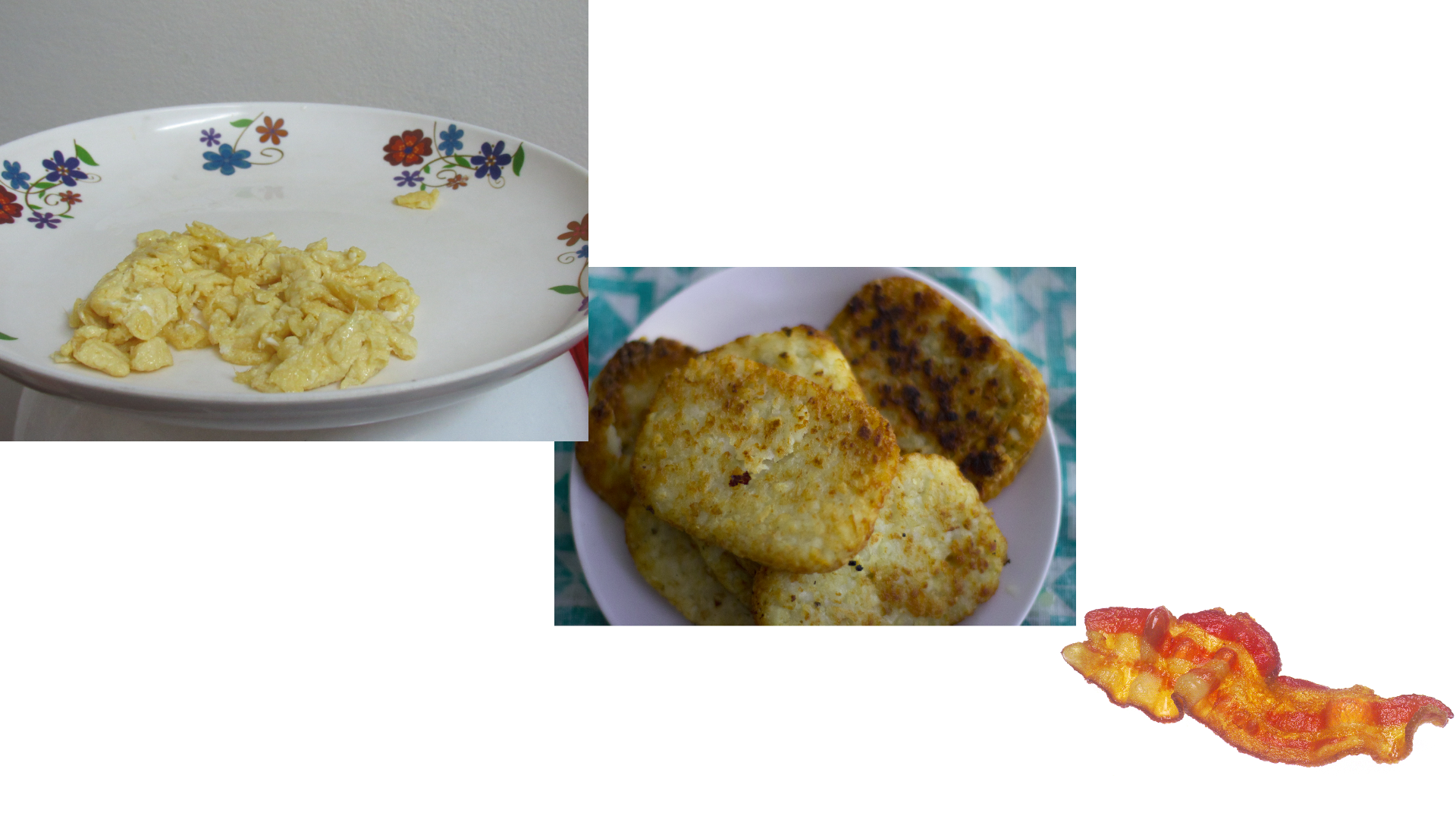
Afifa Afrin used under CC BY-SA 4.0, “ Public Domain, and “ CC BY-SA 3.0.
.jpg)
Note the licensing of this collection. The license I apply to the collection only covers the arrangement of the individual pieces I made. Each individual work retains its own license. But, as with the licensing of an adaptation, the license I apply to the collection must be compatible with the licenses of the individual creations.
The concept of a collection can sometimes be a bit confusing. I was wondering what I would consider this blog post to be: an adaptation or a collection. I think I would consider it to be a collection since each individual CC-licensed creation is unchanged, although I have added my own “stuff” to contextualize each creation. But, it could perhaps also be considered an adaptation since I have incorporated a collection in Breakfast of Champions. Christine Hendricks, in her submission for this same assignment last year, asked similar questions about the boundaries that define the distinction between collections and adaptations. I will need to take more time with this concept before I feel 100% confident in my understanding of it! Either way, the license I have applied to the bottom of this post is compatible with all CC-licenses of the individual creations I have included here.
If you want to read more about the differences between adaptations/derivatives and collections explained in more delicious metaphors , check out this great blog post by Nate Angell: Open Licensing over TV Dinners and Smoothies.
References
TheOGRepository. (2012, September 12). Creating OER and Combining Licenses. [Video File]. Retrieved from http://www.youtube.com/watch?v=Hkz4q2yuQU8
 This work is licensed under a Creative Commons Attribution 4.0 International License.
It can be a little confusing!
Very!
Reblogged this on eLearning, Camosun College and commented:
And here is my fourth assignment from the Creative Commons Certificate!